
New Zealand Ant Species Identification
Argentine Ants
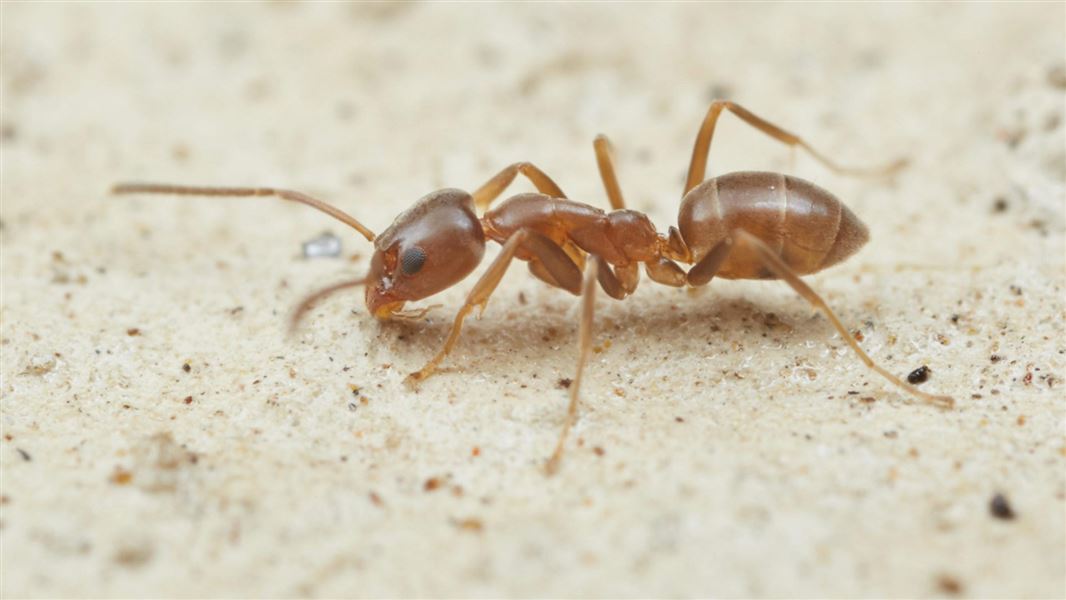
Argentine ants are one of the more difficult ant species to control in New Zealand. They are small, usually around 2.5–3 mm long, and are light brown to honey-brown in colour.
The biggest giveaway is the amount of ants you see. Argentine ants often appear in very large numbers and form strong, busy trails. They may trail along footpaths, garden edges, retaining walls, fences, exterior walls, window frames, pipes, and into buildings.
They are most active through the warmer months, especially spring and summer, when colonies expand and food demand increases. During warm conditions, they can forage during the day and night. In cooler weather, activity may reduce but the colony can still be present nearby.
Argentine ants are strong sugar feeders and are often attracted to honeydew, nectar, sweet foods, and sugary residues. However, during colony growth periods, especially in warmer months, they may also show strong interest in protein because the colony needs it for larvae and reproduction.
Common signs of Argentine ants:
- Large numbers of small brown ants
- Strong trails outside and around building edges
- Activity around gardens, trees, fences, paths, and retaining walls
- Ants appearing in multiple areas at once
- High interest in sweet foods, honeydew, and sometimes protein
- Ongoing activity after basic spraying
Argentine ant problems usually need a more thorough treatment plan because colonies can be large, spread out, and connected across multiple nesting areas.
White-Footed House Ants
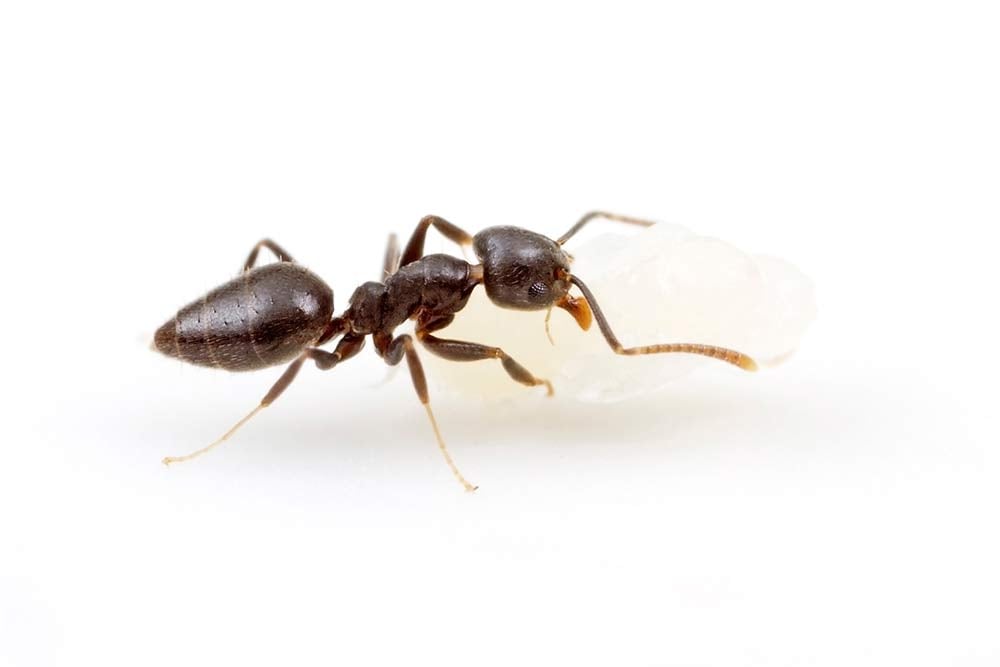
White-footed house ants are dark brown to black ants, usually around 2.5–3 mm long. Their name comes from the pale or whitish ends of their legs, although this can be hard to see without magnification.
These ants are often noticed trailing along exterior walls, fences, trees, rooflines, window frames, and building edges. They commonly move between vegetation and buildings, especially where trees or shrubs touch the structure.
White-footed house ants are strong sugar feeders. They are often attracted to honeydew from sap-sucking insects, which is why you may see them trailing up trees or plants rather than just heading straight to food inside.
They can form very large colonies, and the trails can stay active for long periods. You may see steady ant movement day after day in the same areas. They can also be difficult to control because bait is not always shared through the colony in the same way as other ant species.
Common signs of white-footed house ants:
- Dark ants with pale-looking feet
- Long trails along walls, fences, trees, and rooflines
- Strong activity around vegetation touching the building
- Regular trails that stay active for weeks or months
- Heavy attraction to sugar and honeydew
- Ants entering through gaps, windows, roof areas, or wall cavities
White-footed house ants often need a combination of treatment and prevention, including trimming vegetation, reducing honeydew sources, treating key trails, and targeting entry points.
Black House Ants
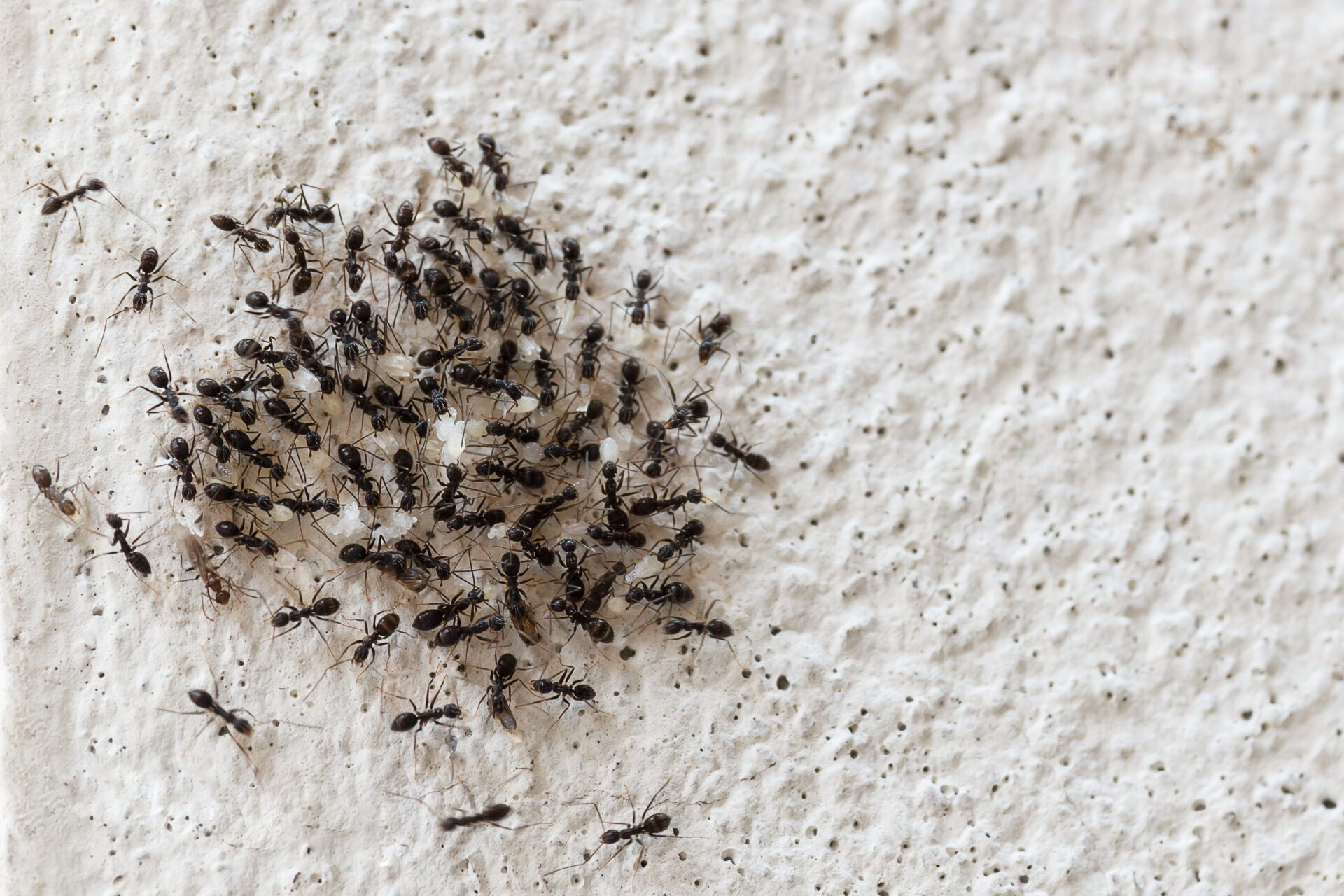
Black house ants are small, shiny black ants, usually around 2–3 mm long. They are one of the more recognisable ant species because of their dark colour and the way they trail into food areas.
They are commonly found around kitchens, cupboards, bins, benches, sinks, food storage areas, window frames, exterior cracks, and wall gaps. They may nest outside under paths, pavers, garden edges, cracks, or inside wall cavities and roof voids.
Black house ants are mainly sugar feeders. They are often attracted to sweet foods, syrups, fruit, crumbs, and sugary residues. They can also take protein or grease at times, especially if the colony needs it, but sugar is usually the main attraction.
Activity is usually more noticeable in warmer months, but they may appear inside at any time if food and moisture are available.
Common signs of black house ants:
- Small shiny black ants
- Trails around kitchens, food areas, bins, and sinks
- Interest in sugar, crumbs, fruit, and sweet residues
- Nesting around cracks, paths, pavers, wall gaps, or roof voids
- Smaller trails than Argentine ants, but still persistent
- Repeated activity around the same food source
Black house ants can often be controlled well when the main trail, nest area, food source, and entry points are identified.
Darwin’s Ants
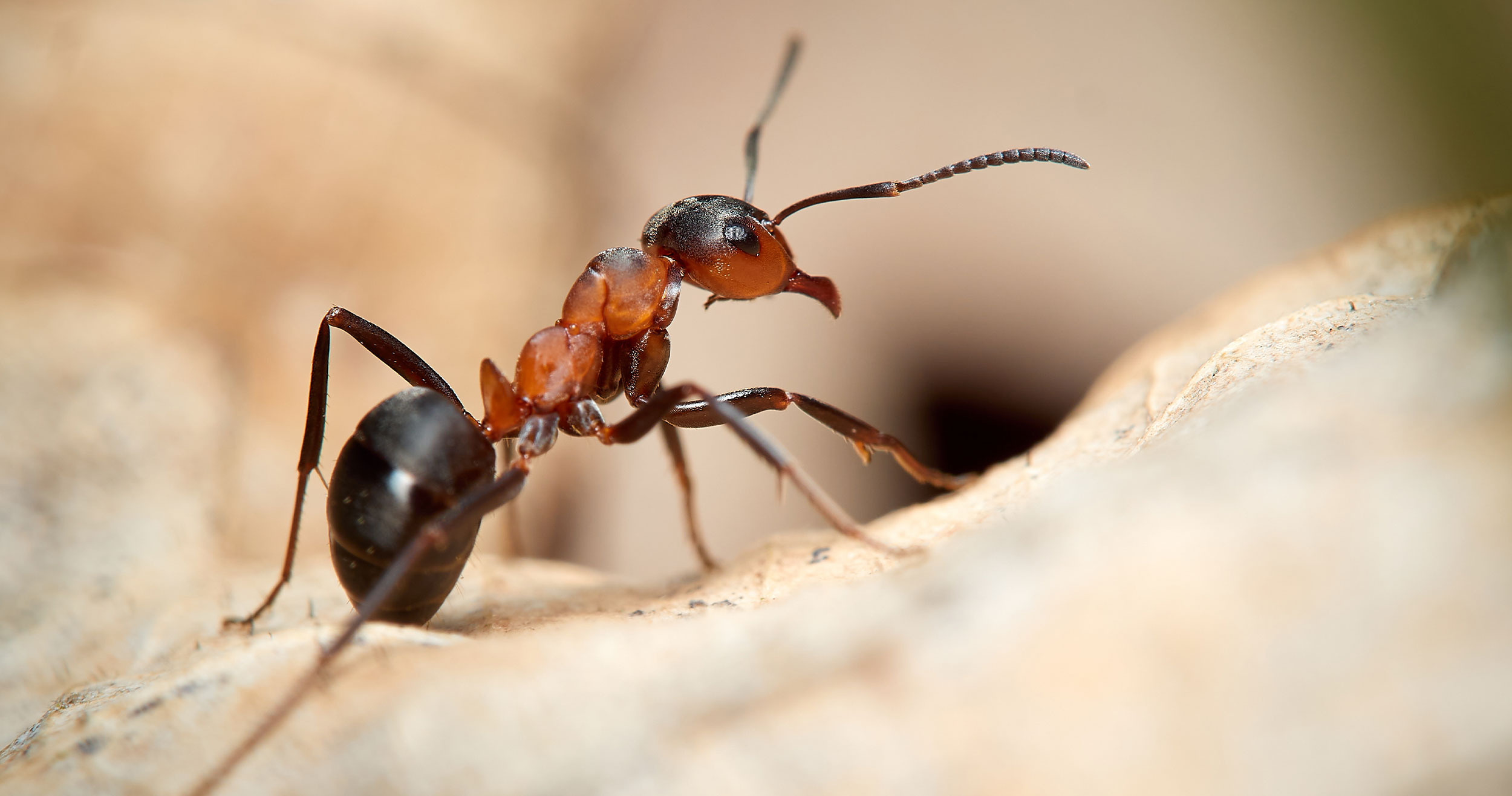
Darwin’s ants are small brown ants, usually around 2–3 mm long. They can look similar to Argentine ants at first, which is why they are often misidentified.
A useful clue is their colouring. Darwin’s ants often have a darker brown head with a lighter brown body and legs. They may also give off a noticeable musty or greasy smell when crushed.
They can form large colonies and may be found around gardens, paths, soil, exterior cracks, shops, buildings, and food areas. In warmer months, numbers can increase and trails may become more obvious.
Darwin’s ants are mixed feeders. They may take sugar-based foods, protein-based foods, and other food scraps depending on what the colony needs. If they are feeding around sweet spills, fruit, or honeydew, they may respond more like sugar feeders. If they are around pet food, dead insects, or food waste, they may be showing a stronger protein interest.
Common signs of Darwin’s ants:
- Small brown ants around 2–3 mm
- Darker head with lighter brown body
- Can look similar to Argentine ants
- Musty or greasy smell when crushed
- Trails around gardens, paths, cracks, and buildings
- Can be attracted to both sugar and protein sources
Darwin’s ants are best treated after inspection because they can be confused with other brown ant species.
Big-Headed Ants / Coastal Brown Ants
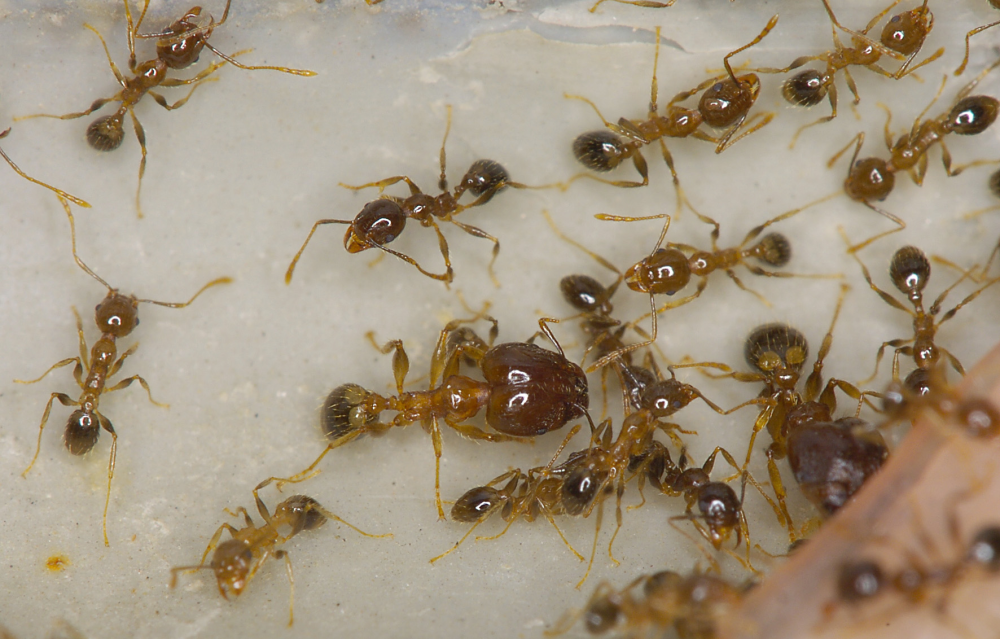
Big-headed ants, also known as coastal brown ants, are usually light brown to darker brown. The key identification feature is the difference in worker size. Some workers have noticeably larger heads, while others are much smaller.
They are often found outside in soil, lawns, garden beds, paths, pavers, cracks, and around building edges. They can create visible soil movement or small mounds around nesting areas.
Big-headed ants are generally more attracted to protein, oils, and fats than simple sugar. They may feed on dead insects, meat scraps, grease, pet food, and other fatty or protein-based material. They may also tend sap-sucking insects, so sugar sources can still play a role.
They can reach high numbers outdoors and may become more noticeable during warmer weather when colonies are active.
Common signs of big-headed ants:
- Brown ants with some workers having larger heads
- Activity around soil, paths, pavers, lawns, and garden beds
- Small soil deposits or mounding near cracks
- Interest in protein, grease, fats, dead insects, or pet food
- Outdoor trails around foundations and paved areas
- High numbers around nesting zones
Treatment usually focuses on the nest sites, outdoor trails, soil areas, and any entry points leading inside.
Pharaoh Ants
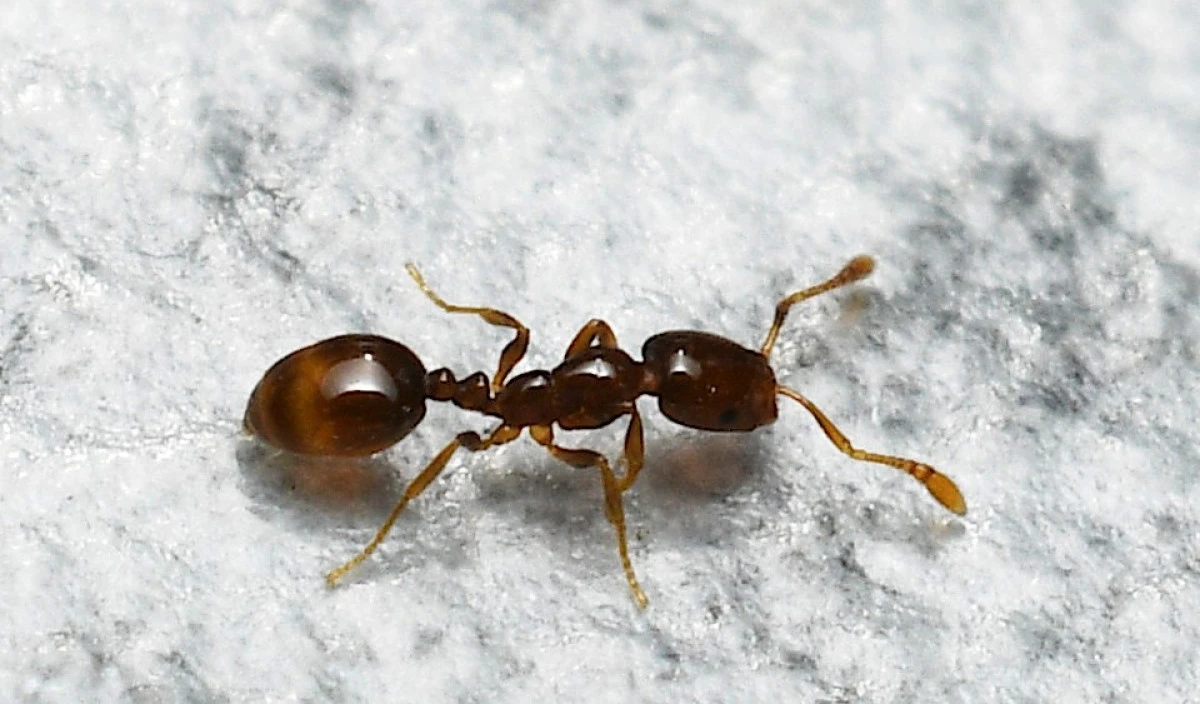
Pharaoh ants are tiny ants, usually yellow to light brown in colour. They are much smaller than many other pest ants and are often found indoors in warm, protected areas.
They can be a serious concern in sensitive environments because they may trail through kitchens, bathrooms, wall voids, service ducts, hospitals, healthcare areas, and food-handling sites. They can form persistent trails and may spread if treated incorrectly.
Pharaoh ants are mixed feeders. They can feed on sugar, protein, oils, grease, and even dried blood or biological material in sensitive sites. Their preference may change depending on the needs of the colony, so bait choice is very important.
They are often active during the day and may remain active throughout the year indoors because warm buildings provide stable conditions.
Common signs of Pharaoh ants:
- Very small yellow to light brown ants
- Indoor activity, especially in warm areas
- Trails through kitchens, bathrooms, service areas, and wall gaps
- Interest in protein, sugar, grease, and oils
- Activity that spreads after incorrect spraying
- Persistent trails that keep appearing in new areas
Pharaoh ants should not be treated with basic surface spraying. A careful baiting and monitoring programme is usually required.